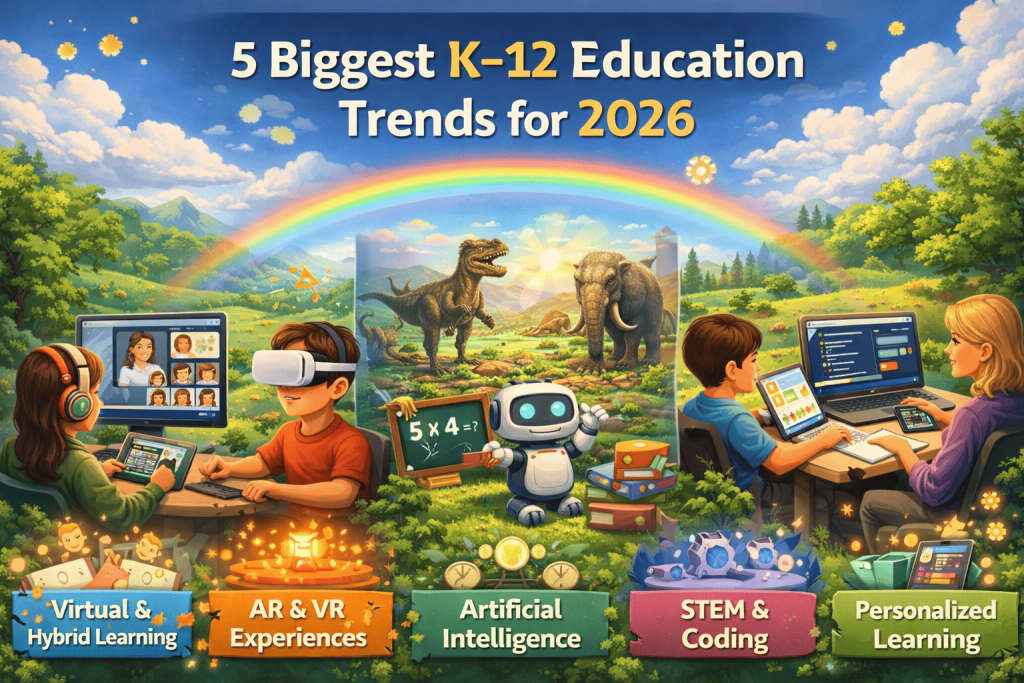
The landscape of K–12 education in 2026 is no longer a conversation about the “future”—it is a lived reality of rapid digital transformation, hyper-personalization, and skills-centric learning. As we navigate this year, the shift from traditional “chalk-and-talk” methods to tech-enabled, student-centric ecosystems is complete.
For educational institutions and stakeholders, staying ahead of these shifts is essential. From the integration of Artificial Intelligence to the rise of immersive environments, here are the 5 biggest K–12 education trends for 2026 that are reshaping classrooms globally and in India.
1. AI-Powered Hyper-Personalized Learning
In 2026, Artificial Intelligence has moved from a novelty to the very “backbone” of the classroom. K–12 learning solutions now leverage AI to move beyond basic adaptive quizzes to true hyper-personalization.
- Real-Time Adaptation: AI algorithms analyze a student’s learning pace, emotional engagement, and mastery levels in real-time, adjusting the curriculum instantly.
- Intelligent Tutoring: Students now have access to 24/7 AI tutors that provide on-demand academic support, bridging the gap when teachers are unavailable.
- Reduced Teacher Burnout: By automating administrative tasks like grading and lesson planning, AI allows educators to focus on mentorship and socio-emotional support.
2. Immersive and Experiential Learning (AR/VR/XR)
The days of static textbook diagrams are being replaced by high-fidelity, immersive experiences. K-12 e-learning companies in India are increasingly integrating Augmented Reality (AR) and Virtual Reality (VR) into their core offerings.
In 2026, students don’t just read about the Harappan civilization; they walk through its streets. They don’t just study the human heart; they journey through its chambers in a 3D environment. This shift toward “learning by doing” has significantly improved retention rates and student engagement, especially in complex STEM subjects.
3. Microlearning and Skill-Based “Nanodegrees”
With the job market evolving faster than traditional curricula, 2026 sees a major push toward microlearning. Instead of year-long courses that may become obsolete, students are engaging in shorter, bite-sized modules focused on specific, future-ready skills.
- Modular Progression: Students earn digital badges and micro-credentials in areas like AI literacy, sustainable design, and data ethics.
- NEP 2020 Alignment: In India, this trend is heavily supported by the National Education Policy’s emphasis on vocational training and flexibility.
- Mobile-First Content: Most k-12 learning solutions are now optimized for mobile devices, allowing students to learn “in the moment” and at their own convenience.
4. The Rise of Hybrid “Phygital” Classrooms
The binary choice between “online” and “offline” has vanished. The current trend in education is the “Phygital” model—a seamless blend of physical classroom interaction and digital flexibility.
In 2026, hybrid learning will be the standard. Students may attend a physical lab for hands-on experiments but collaborate with peers globally via cloud-based platforms for their research projects. This model ensures that education is resilient to disruptions and inclusive of different learning needs and geographic locations.
5. Focus on Social-Emotional Learning (SEL) & Mental Well-being
As technology takes over the cognitive heavy lifting, the human element of education has become more valuable than ever. 2026 marks a significant shift where Socio-Emotional Learning (SEL) is integrated directly into the digital curriculum.
Learning management ecosystems now include “well-being dashboards” that track student stress levels and engagement. Educators are prioritizing empathy, resilience, and ethical decision-making, ensuring that students are not just technologically proficient but also emotionally grounded in an AI-driven world.
Why Choosing the Right Partner Matters
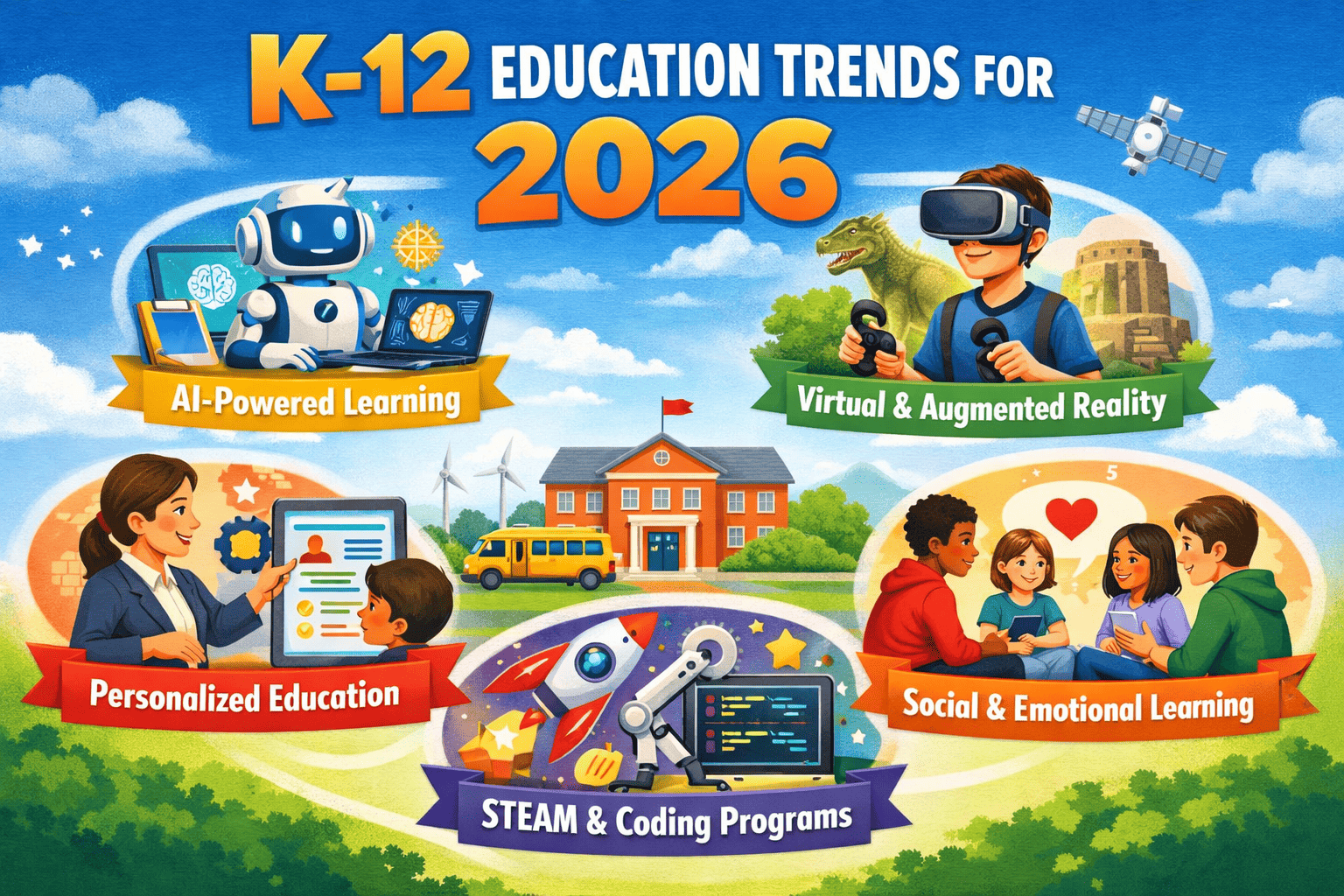
As these K–12 Education Trends for 2026 continue to evolve, schools and educational organizations need robust, scalable technology to keep pace. This is where expertise in digital content and platform development becomes critical.
Dynamic Pixel stands at the forefront of this transformation, offering comprehensive k-12 learning solutions that align with global standards and the specific needs of the Indian market. As one of the leading k12 e-learning companies in india, we specialize in:
- Developing AI-driven adaptive content.
- Creating immersive AR/VR educational modules.
- Designing modular, microlearning-based curricula.
- Building resilient hybrid learning ecosystems.
Final Thoughts
The K–12 education in 2026 is about more than just technology; it is about creating a more equitable, engaging, and effective environment for every learner. By embracing these trends, institutions can prepare students not just for exams, but for life.