
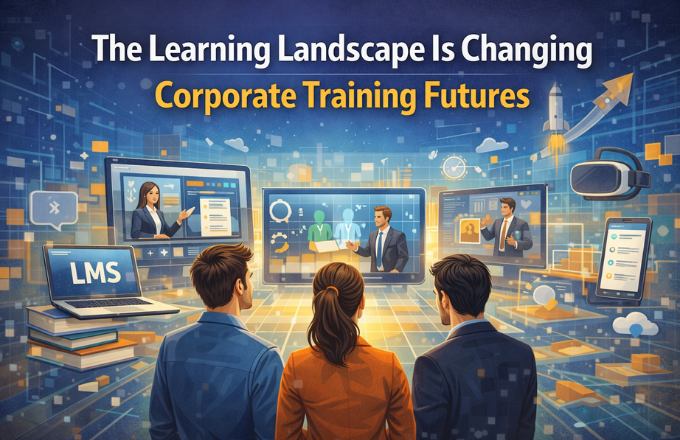
By 2026, long meetings with dull slide shows stopped being how companies teach their people. Learning now lives inside everyday tasks, shaped uniquely for each worker. It keeps moving, never pausing, built right into the rhythm of doing work.
Once, learning meant going to sessions. Now it weaves into daily life. Shifts like smarter machines have pushed this change along. Working both online and onsite has become ordinary now. People joining workplaces care about growing themselves just as much as money. Seeing Why 2026 Is Different in elearning matters greatly. Staying ahead means paying attention. Keeping good people depends on it.
What Changes in eLearning by 2026
Something shifted this year. Not merely tools passing information anymore – technology now shapes how students engage with material. It steps into lessons like a partner, not just a channel.
1. From Content Libraries to AI-Powered Curation
Last time, firms made noise over how many courses they offered. Come 2026, piling on extra material doesn’t mean smarter learning. Sharp teams now see staff drown when handed too many picks. Rather than treat lessons like fixed stops, smart systems stir them live – AI blends bits on the fly so each worker follows a trail shaped just for them.
2. The Rise of AI Coaching
A once-simple chatbot now acts more like a thinking partner. Not limited to replies, it guides users moment by moment. When someone faces a tough talk about job performance, the system steps in quietly – running through lines, adjusting how things sound, nudging toward kinder word choices, all without leaving the messaging window.
3. Tracking Skill Instead of Finishing
What counts now isn’t completion rates. What matters lives inside dynamic capability dashboards instead. Streaming updates show exactly how learning shapes actions on the job. Think fewer mistakes over weeks. Imagine faster ramp-up times for recent starters. By 2026, no observable change means no training occurred at all.
The Move to Hands On Learning When Needed
Now it’s different. Instead of studying stuff for a future maybe, people learn right when they must use it. Knowledge waits until the task shows up. Before, lessons sat unused, stored like old tools. Today, learning kicks in only when needed. The timing has flipped. Readiness matters less than response. What was once preparation now becomes instant reaction.
Right there in the middle of typing a message, help pops up – like a quick video on sealing big deals while working live in Salesforce. A note appears beside your chat window during a team huddle in Teams, timing it just right. Instead of switching tabs, guidance shows directly inside the tool you are using. When building a client pitch, a short pointer slides into view showing what top reps do at that exact step. Even mid-conversation in Slack, useful hints appear without needing to search. As actions unfold, learning slips quietly alongside them.
Picture this. Workers fixing machines now get step-by-step help floating right before their eyes, thanks to augmented reality. Instead of flipping through manuals, they follow digital guides layered over real equipment. Meanwhile, people in warehouses train for rare crises using virtual setups that feel almost lifelike. These aren’t futuristic ideas anymore – this is how things work today. Virtual drills prepare teams without any risk, just realism. What once seemed like lab experiments now runs daily operations.
A single video doesn’t cut it anymore. By 2026, tiny lessons link together like scenes in a story. Picture starting with a short situation when you wake up. Midday brings a moment to pause and think back. Then later, near the end of your shift, a brief check-in tests what stuck. These pieces fit because they follow one another. Memory holds on better this way.

Best Corporate LMS Options for 2026
Today’s top learning systems aren’t just boxes for files. Think of them as smart setups that adapt. If you’re checking out the best corporate lms options, here’s what truly matters. These tools need to do more than sit there. They should respond, guide, adjust. A solid system stays active, not passive. Watch how it handles updates without help. See if it suggests next steps on its own. Does it remember user habits? Can it shape content based on feedback? Pick one that learns along with people. Silence won’t cut it anymore.
- A part of the day’s flow, not an add-on – that’s how learning should feel. Tools that link directly into HRIS, CRM, or chat platforms make it blend instead of stand apart. Skip the siloed experience; tie it right into what teams already use. When training splits off, attention drops fast.
- Predictive analytics – few signs show trouble early – watch for patterns where workers start slipping, clues hide in daily performance dips. Teams drift off track when one role lacks key skills, gaps grow without notice until results dip. Smart tracking spots these shifts ahead of time, like noticing quiet changes before they swell. Predictions come from steady data flows, not guesswork, giving space to adjust course. Some systems highlight risks weeks prior, offering room to respond before impact hits.
- Offline Access – Learning happens anywhere now. Whether riding a bus or sitting on a plane without internet, workers need access. Content saves locally. Updates sync once connection returns. Devices stay in step across locations. Access stays smooth even when online gaps appear.
- Social Learning Ecosystems – Learning together online grows when people coach each other. Content made by users adds fresh energy to the platform. Talk spaces help learners connect naturally instead of just watching videos. The system feels alive once real interactions take place day after day.
Partnership With Content Specialists
Putting together such a complex system on your own takes huge effort. That is the reason numerous large international firms choose to work alongside the best e learning content development companies in india. A wave of fresh thinking around training has risen there, blending smart teaching methods with affordable growth potential.
Out front, outfits such as Dynamic Pixel ditch the usual click-and-move format. Today’s best e learning content development companies in india shift toward deeper engagement. Not just slides, but real interaction shapes their work. Instead of repeating old templates, companies like Dynamic Pixel build experiences that respond. Driven by user choices, lessons unfold in varied paths. Behind each screen, thinking goes beyond completion rates. What matters grows from how people stay involved. Progress shows up not in checkboxes, but in moments of understanding.
- Human-Centered Design: Starting with people makes messages feel familiar across ages. Feelings guide how workers connect to words on screen. Different life stages respond to different tones. Emotion shapes attention more than facts alone.
- Gamified Narratives: Stories mixed with challenges make practice feel less like work. Points and levels nudge people forward without feeling forced. Rewards show up just when things start to click. Learning sticks because it moves at the pace of play.
- Rapid Localization: Built fast translation into cultural fit, shaping deep training scenes for worldwide groups without delay. Speed made room – complex stories moved across borders smoothly, fitting minds through meaning.
Starting fresh with Dynamic Pixel helps groups turn unrefined information into engaging tools built for the 2026 way of learning. Because working together changes how ideas flow, what once sat unused now moves with purpose through smarter formats.
Learning Is the New Work
By 2026, doing tasks and gaining knowledge exist on one path. Success now favors groups less focused on having cutting-edge artificial intelligence. Instead, it flows to those using such systems to deepen genuine human interest. Growth thrives where machines support real questions. Curiosity becomes stronger when tech lifts people, not replaces them.
A single shift changes everything – training adapts before a worker even stumbles, offering help exactly when confusion strikes, while progress tracks what people can truly do. Staying alert to change, using smart tools alongside strong content sources, means employees don’t only face what comes next – they begin building it long before it arrives.
Also Check: Top 5 E-Learning Education Provider in India 2026