A Certified Moodle Partner is an organisation officially recognised by Moodle HQ, the company behind the world’s most widely used open-source LMS, for meeting defined standards in technical capability and customer service. Certification isn’t automatic — candidates need at least a year of hands-on Moodle experience, a proven track record, and they pay a royalty back to Moodle on related work. In practice, it means the difference between hiring a developer who “knows Moodle” and hiring a vetted, accountable partner with direct access to Moodle HQ.
Introduction
If you’re evaluating LMS vendors for your organisation, you’ve probably come across the term “Certified Moodle Partner” more than once — usually in a sales pitch. It sounds official. But what does it actually verify, and does it matter for your specific project?
This isn’t a promotional explainer. It’s a practical breakdown of what the certification means, what it doesn’t cover, and what questions you should actually be asking before signing with any Moodle implementation partner.
What Is a Moodle Partner?
Moodle is an open-source learning management system, which means anyone with the technical skill can download it, customise it, and offer it as a service — certified or not. This openness is part of what makes Moodle popular, but it also means the market is full of developers and agencies with varying levels of actual expertise.
To bring some structure to this, Moodle HQ — the organisation that develops and maintains Moodle — runs an official Partner Program. A Moodle Partner is a company that has applied to this program, been assessed against Moodle’s standards, and been formally admitted. It’s the difference between someone who’s used Moodle on a few projects and an organisation Moodle itself has reviewed and endorsed.
What a Certified Partner Does
A Moodle Certified Partner typically offers one or more of the following services:
- Implementation — setting up and configuring a Moodle instance for a client’s specific needs
- Hosting — managing the server infrastructure that keeps a Moodle site running securely and reliably
- Customisation and plugin development — building custom themes, plugins, or integrations
- Training — helping institutions and their staff use Moodle effectively
- Ongoing support and maintenance — handling updates, security patches, and technical troubleshooting
Not every Certified Partner offers all of these — the program doesn’t require it. This is one of the first things worth clarifying with any partner: which of these services do they actually deliver in-house, and which do they outsource?
What Is a Certified Moodle Partner in India, Specifically?
India has a growing number of organisations offering Moodle-related services, but only a subset are officially certified by Moodle HQ. For institutions and businesses based in India, working with a Certified Moodle Partner in India offers a few practical advantages over an international partner:
- Time-zone aligned support and faster response during local business hours
- Familiarity with region-specific requirements — such as multi-language content, regional compliance needs, or infrastructure constraints
- Easier in-person collaboration for larger implementation projects, where on-site coordination genuinely helps
That said, certification itself is issued by Moodle HQ globally — being based in India doesn’t change the certification process, only the practical experience of working with that partner day to day.
How the Certification Process Actually Works
Understanding the process helps explain why certification is a meaningful signal rather than just a badge:
- Application — The organisation submits a formal application through Moodle’s Partner Program, demonstrating relevant experience.
- Experience requirement — Moodle requires candidates to show a minimum of one year of hands-on experience delivering Moodle-related services, though most successful applicants have significantly more.
- Assessment — Moodle HQ reviews the applicant’s technical capability, customer service standards, and — in many cases — financial and legal information.
- Approval and trademark rights — Once approved, the partner gains the right to use the Moodle name and official Certified Partner logo when marketing their services — a right Moodle HQ restricts specifically to approved partners.
- Ongoing obligations — Certified Partners pay a royalty (a percentage of Moodle-related revenue) back to Moodle HQ, which funds the platform’s continued open-source development.
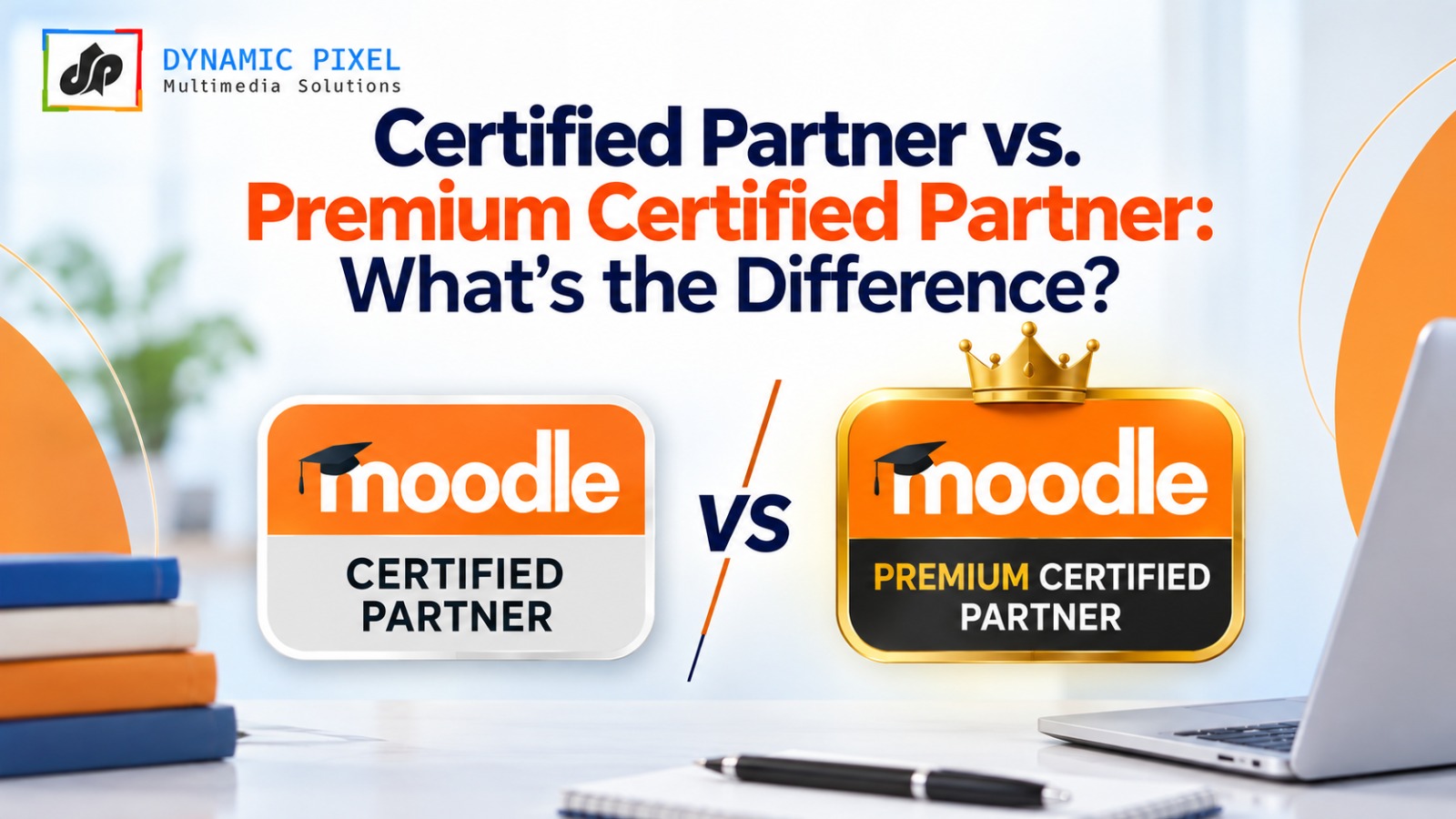
Certified Partner vs. Premium Certified Partner: What’s the Difference?
This is a distinction most buyers don’t know to ask about — and it matters more than it seems.
|
Tier |
What It Covers |
What It Doesn’t Cover |
|---|---|---|
|
Certified Partner |
Implementation and support for standard Moodle LMS |
Cannot implement Moodle Workplace (the enterprise/corporate edition) |
|
Premium Certified Partner |
Everything a standard Certified Partner offers, plus Moodle Workplace implementation |
Reserved for partners meeting Moodle HQ’s highest technical and service standards |
If your organisation is specifically considering Moodle Workplace for corporate training, this distinction directly affects which partners you can even work with — only Premium Certified Partners are authorised to deliver it.
Why Choose a Certified Premium Moodle Partner?
Beyond the Workplace access, a Premium tier partner generally represents a longer, more scrutinised track record with Moodle HQ. Reasons organisations lean toward this tier for larger or more complex projects:
- Access to Moodle Workplace, which standard Certified Partners cannot offer
- A demonstrated history of successful implementations, since Premium status isn’t granted quickly
- Deeper alignment with Moodle HQ’s roadmap, given the closer working relationship this tier typically involves
For smaller, single-institution deployments, a standard Certified Partner is often entirely sufficient — the Premium tier mainly matters when Workplace or large-scale enterprise deployment is part of the plan.
How to Choose a Moodle Implementation Partner
Certification is a useful filter, but it’s a starting point, not the whole decision. Here’s what actually matters when comparing partners:
- Ask what services they deliver in-house. Some partners subcontract hosting or development — worth knowing upfront.
- Ask for relevant case studies or references, ideally from organisations similar in size or sector to yours.
- Clarify what happens after go-live. Implementation is one project; ongoing support is a different, ongoing relationship — make sure both are clearly scoped.
- Understand their customisation capability. A partner that can only do standard configuration will struggle if your requirements go beyond Moodle’s defaults.
- Ask directly whether they’re a Certified or Premium Certified Partner, and request to verify this against Moodle’s own partner directory.
Common Mistakes When Choosing a Moodle Partner
- Assuming “Moodle experience” equals certification. Plenty of agencies have used Moodle without being formally certified — that’s not necessarily disqualifying, but it’s a different level of accountability.
- Not checking which services are actually in-house. A partner that outsources hosting or development introduces an extra layer you’re not directly dealing with.
- Ignoring the Certified vs. Premium distinction when Moodle Workplace is actually needed for the project.
- Choosing purely on price without checking post-implementation support terms — LMS platforms need ongoing maintenance, not just a one-time setup.
- Not verifying certification independently — Moodle maintains an official partner directory, and it takes a few minutes to confirm a company’s status directly rather than relying on their own claims.
Does Working With a Moodle Partner Cost More?
This is one of the most common questions from organisations evaluating Moodle, and it’s worth answering plainly: it depends on what you’re comparing it against, not on whether the partner is certified.
Certified Partners pay a royalty to Moodle HQ, which can factor into their pricing. But the more relevant comparison is what you’re actually paying for — implementation quality, support responsiveness, and accountability — rather than certification status alone. A cheaper, uncertified provider isn’t automatically a worse choice, but you lose the layer of Moodle HQ’s own vetting and the trademark accountability that comes with certified status.
When Should You Consult a Moodle Partner?
It’s worth reaching out to a Certified Moodle Partner if:
- You’re setting up an LMS for the first time and want to avoid costly configuration mistakes
- Your current Moodle setup needs custom features, plugins, or integrations that require real development expertise
- You’re evaluating Moodle Workplace for corporate or enterprise training
- Your existing Moodle instance needs a security review, performance audit, or version upgrade
At Dynamic Pixel, we work as a Certified Moodle Partner, offering implementation, custom branding, hosting, and ongoing support for organisations across corporate, educational, and government sectors. If you’re evaluating Moodle for your organisation, our team can walk you through what a properly scoped implementation actually looks like for your specific requirements.
FAQs
Q1. What is a Certified Moodle Partner?
A Certified Moodle Partner is an organisation officially recognised by Moodle HQ for meeting defined standards in technical capability and customer service when delivering Moodle-related services, such as implementation, hosting, customisation, and support.
Q2. Why should I work with a Moodle Partner instead of going direct?
Moodle is free, open-source software, but running it well requires technical expertise most organisations don’t have in-house. A Certified Partner brings vetted implementation experience, ongoing support, and direct accountability — reducing the risk of costly setup or maintenance mistakes.
Q3. What services does a Moodle Partner provide?
Services typically include implementation, hosting, custom plugin or theme development, staff training, and ongoing technical support. Not every partner offers all of these, so it’s worth confirming which services a specific partner delivers in-house before signing on.
Q4. Does working with a Moodle Partner cost more?
Not necessarily more than a non-certified provider — pricing depends on the scope of work, not certification status alone. Certified Partners pay a royalty to Moodle HQ, which can factor into pricing, but you’re also paying for vetted expertise and accountability.
Q5. What is the difference between a Certified Partner and a Premium Certified Partner?
A standard Certified Partner can implement and support core Moodle LMS. A Premium Certified Partner meets a higher bar set by Moodle HQ and is additionally authorised to implement Moodle Workplace, the enterprise edition used for corporate training.
Q6. How do I verify if a company is genuinely a Certified Moodle Partner?
Moodle HQ maintains an official partner directory on moodle.com. Before signing with any provider claiming certification, it’s worth checking their listing directly rather than relying solely on claims made on their own website.
Q7. Can any company become a Certified Moodle Partner?
No. Moodle HQ requires candidates to demonstrate at least one year of hands-on Moodle service experience, along with evidence of technical skill and customer service standards. Educational institutions and non-profits are generally not admitted to the commercial partner program.
Q8. Is Moodle free if I don’t use a Certified Partner?
Yes, Moodle’s core software is free and open-source regardless of who implements it. What you pay a Certified Partner for is the implementation, hosting, customisation, and support — the expertise needed to run it reliably, not a license fee for the software itself.
Sources
- Moodle Certified Partner Program — Moodle.com
- How Do You Become a Moodle Partner or Service Provider — Moodle Support Knowledge Base
- Find Your Moodle Partner — Moodle Certified Service Providers
Need Help Evaluating Moodle for Your Organisation?
If you’re comparing Moodle implementation partners or exploring whether Moodle fits your training needs, get in touch with Dynamic Pixel to discuss your specific requirements with a Certified Moodle Partner team.
