The professional landscape in India has reached a pivotal juncture in 2026. As the economy continues its digital acceleration, the demand for sophisticated, personalized, and agile upskilling has never been higher. Traditional methods are no longer sufficient to keep pace with the rapid technological shifts. Consequently, Corporate Training in India has undergone a massive transformation, moving away from static learning systems toward more dynamic, learner-centric environments.
At the heart of this revolution is the rise of the LXP. Unlike older models that focused primarily on administrative tracking, Top Learning Experience Platforms prioritize the individual learner’s journey, utilizing artificial intelligence and social features to create a more engaging educational ecosystem.
The Shift to Learning Experience Platforms for Corporate Training
In previous years, the focus was often on compliance and mandatory modules. However, in 2026, the primary objective is skill mastery and employee retention. Learning Experience Platforms for Corporate Training are designed to meet these goals by offering a “Netflix-style” interface that suggests content based on an employee’s role, interests, and previous performance.
This shift is particularly relevant in the Indian market, where a massive, tech-savvy workforce requires training that is accessible, mobile-friendly, and highly relevant to global industry standards. By moving toward an LXP model, organizations can foster a culture of continuous learning rather than one-off training events.
Why the LXP is Dominating Corporate Training in India
Several factors have contributed to the dominance of these platforms within the Indian corporate sector:
- Personalized Skill Paths: The Top Learning Experience Platforms use AI to map out specific career trajectories for employees. In a competitive market like India, the ability to see a clear path for professional growth is a significant factor in employee satisfaction.
- User-Generated Content and Social Learning: Indian professionals are highly collaborative. Modern platforms allow team members to share insights, recommend courses to peers, and participate in discussion forums, turning internal knowledge into a corporate asset.
- Micro-learning Integration: With the 2026 workforce facing shorter attention spans and higher workloads, the ability to consume “bite-sized” content on the go is essential.
- Data-Driven Insights: Leadership can now see not just who completed a course, but how deeply they engaged with the material, allowing for a more accurate calculation of ROI.
The Importance of High-Quality Content Development
A platform is only as good as the material it hosts. This is where the partnership between technology and creativity becomes crucial. To truly engage the diverse workforce involved in Corporate Training in India, the content must be culturally relevant, technically accurate, and visually stimulating.
Many organizations are turning to a Dynamic Pixel philosophy of content creation. This approach ensures that modules are not just informative but are interactive experiences that drive retention. By working with the best e learning content development companies in india, firms can ensure that their LXP is populated with high-end simulations, gamified assessments, and video-based storytelling that resonates with modern learners.
The best e learning content development companies in india are those that understand the local nuances of the workforce while maintaining a global standard of instructional design. This ensures that the training is effective across different regions and seniority levels.
Key Features to Look for in 2026
When evaluating Learning Experience Platforms for Corporate Training, decision-makers should look for specific functionalities that define the current gold standard:
- Deep Integration Capabilities: The platform must seamlessly connect with existing HRIS, CRM, and communication tools like Slack or Microsoft Teams.
- Offline Access: Given the varied connectivity across different parts of India, the ability to download content and sync progress later remains a vital feature.
- Multilingual Support: With a diverse workforce, providing training in regional languages alongside English is a major advantage for large-scale Corporate Training in India.
- Advanced Analytics: Predictive analytics that can forecast potential skill gaps before they become a problem for the business.
Strategies for Successful LXP Implementation
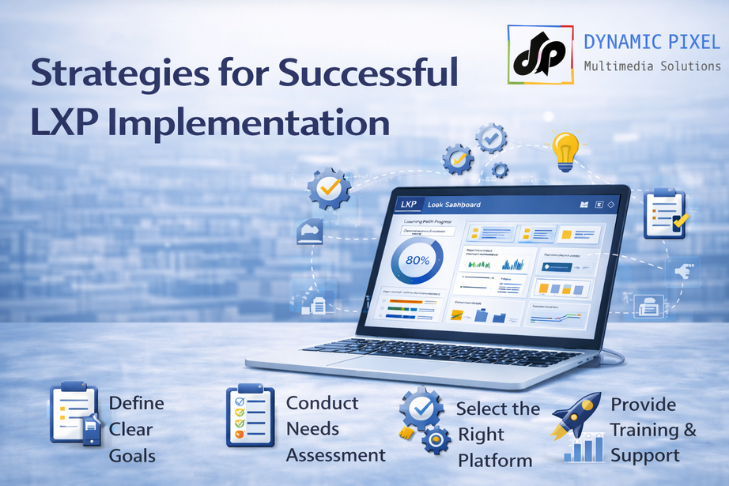
Transitioning to one of the Top Learning Experience Platforms requires more than just a software purchase; it requires a shift in mindset. Organizations that succeed in this transition typically follow a specific roadmap:
1. Define Clear KPIs
Before launching, determine what success looks like. Is it a reduction in onboarding time? An increase in internal promotions? Higher scores in technical assessments?
2. Prioritize Engagement Over Volume
It is tempting to dump thousands of courses into a new system. However, the most successful implementations focus on high-quality, curated paths developed by the best e learning content development companies in india. A Dynamic Pixel approach—prioritizing clarity and interaction—will always outperform a library of boring, text-heavy PDFs.
3. Encourage Leadership Participation
When senior management actively uses the platform and shares their own learning achievements, it sets a powerful example for the rest of the organization.
The Future of Professional Development
As we look further into 2026 and beyond, the boundary between “work” and “learning” will continue to blur. Learning will happen in the flow of work, prompted by the LXP when an employee encounters a challenge it recognizes. This proactive support system is the ultimate goal of Learning Experience Platforms for Corporate Training.
The Indian corporate sector is uniquely positioned to lead this change globally. By leveraging its vast pool of technical talent and its appetite for innovation, India is setting the pace for how modern enterprises develop their most valuable asset: their people.
Conclusion
Navigating the world of Corporate Training in India in 2026 requires a balance of sophisticated technology and world-class content. By selecting from the Top Learning Experience Platforms and populating them with assets from the best e learning content development companies in India, organizations can ensure they stay ahead of the curve.
Investing in a Dynamic Pixel strategy ensures that your training is not just a checkbox exercise, but a genuine engine for growth and innovation. The future of workforce development is personalized, social, and data-driven.
